
It's Thanksgiving morning, the food is going in the oven, and everyone's scrambling to get ready for a big day. Hopefully your family is coming together. Maybe you'll catch one of the many football games on TV, and at some point you'll probably enjoy a roasted or fried turkey.
It's easy to forget that the domestic turkey on our holiday tables is descended from the wild turkey, a member of the pheasant family that is native only to North America. Native peoples of this continent knew and relied on the bird long before Europeans arrived, and it was introduced to European settlers in the 1600s. Today this delicious bird is a cultural part of the American experience.
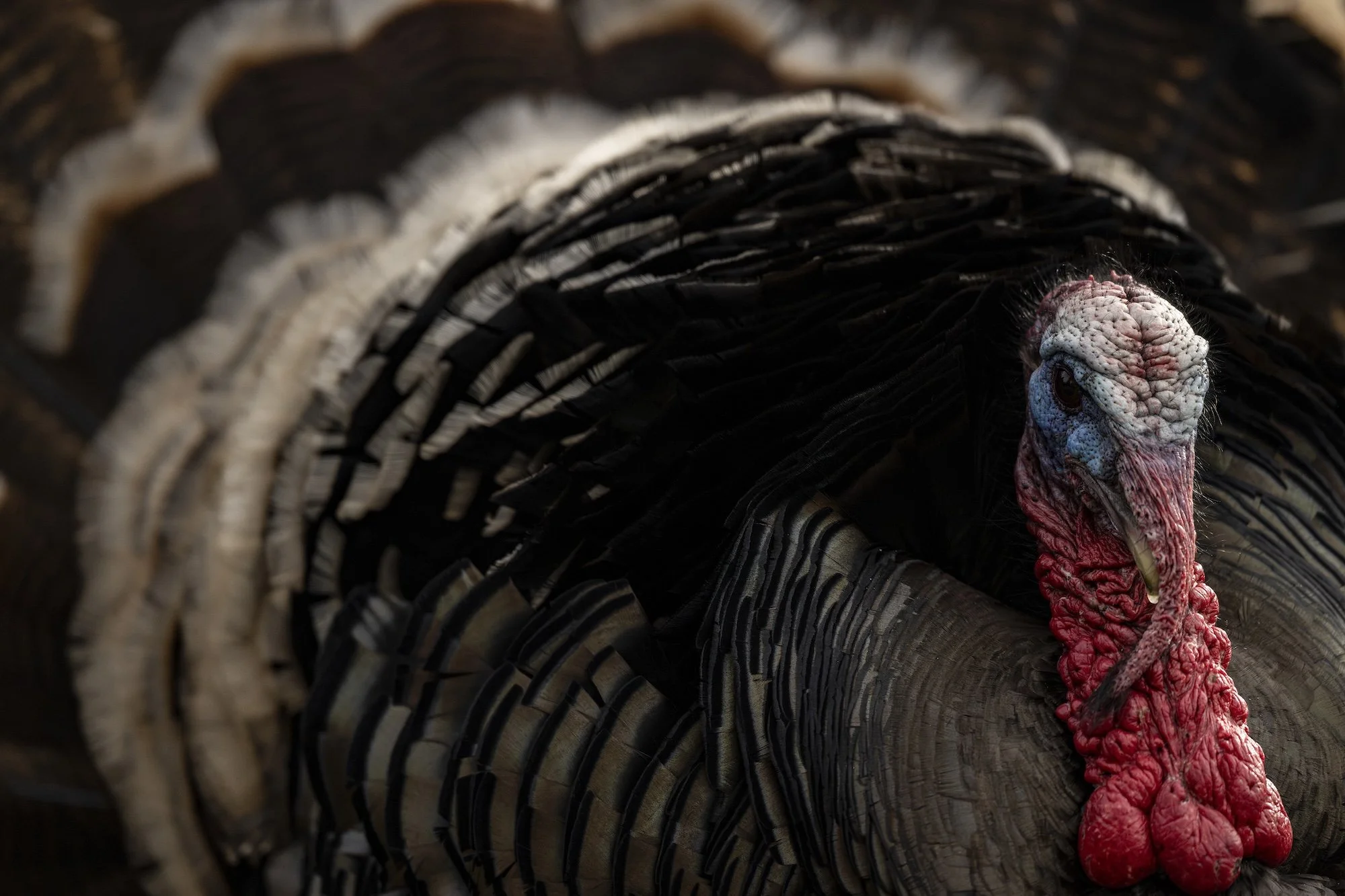
Wild Turkey Tom, RMNP Spring 2026 | Nikon Z9 + Nikkor 500mm F4E FL ED VR
If you aren't familiar with the wild turkey, or you just need some extra trivia for the Thanksgiving table, here are some interesting facts about North America's largest ground bird.
The name has a mix-up in it. "Turkey" comes from a European name for the guineafowl, shortened from "turkey cock" and "turkey hen." Guineafowl were first imported to Europe by way of the nation of Turkey. The name later carried over to the unrelated North American bird.
They're athletic. Wild turkeys are much more athletic than you'd expect. They can run 18 to 25 miles an hour. Long-distance flight isn't their strength, but they can fly up to 55 miles an hour in short bursts. They also fly up into trees at dusk to roost away from predators.
They're big. Male turkeys, called Toms, can weigh up to 24 pounds. The record-sized adult Tom weighed almost 38 pounds. That makes the wild turkey one of the heaviest flying birds in the world.
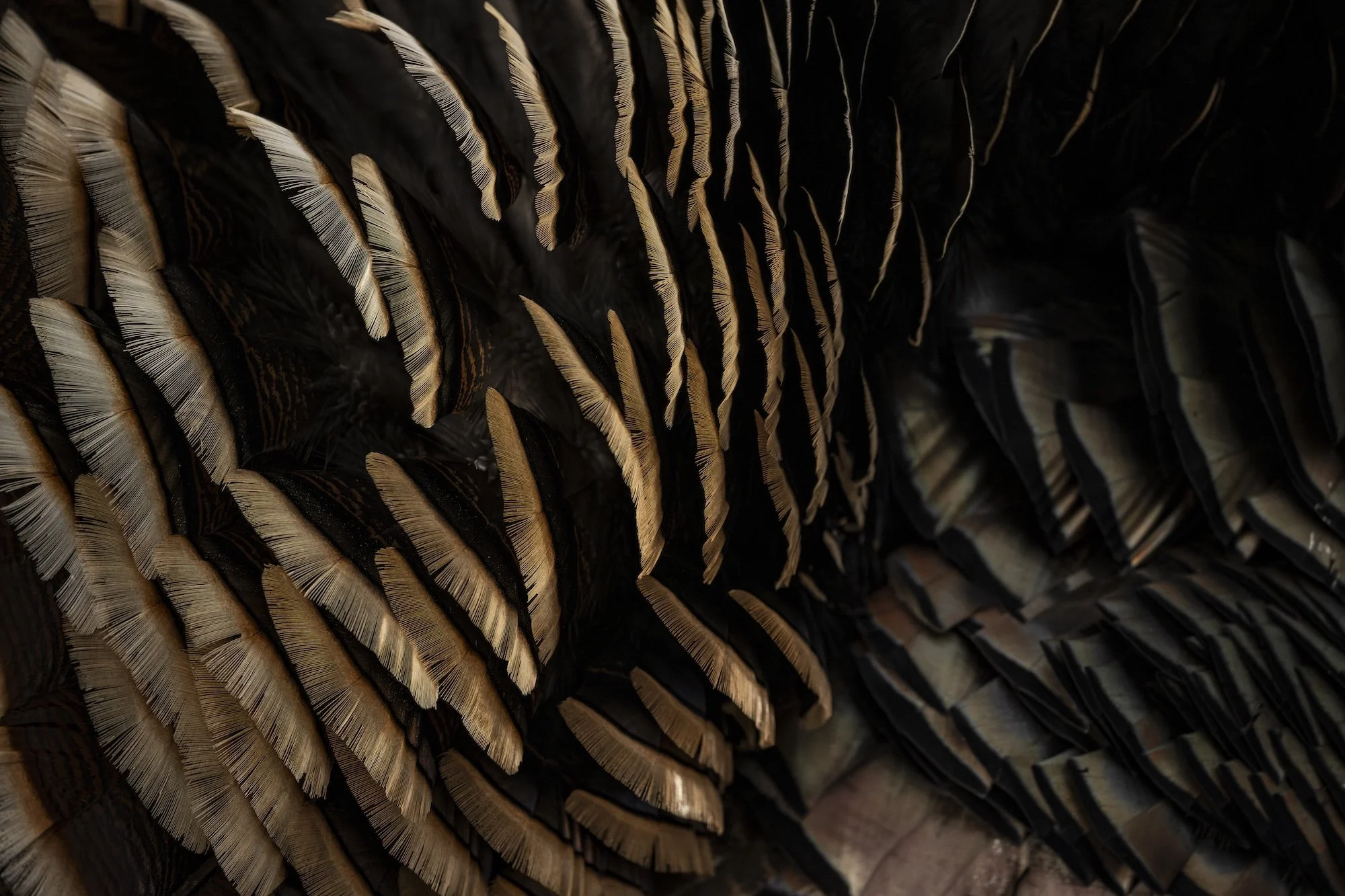
Wild Turkey Tom, RMNP Spring 2026 | Nikon Z9 + Nikkor 500mm F4E FL ED VR
The snood is a signal. The fleshy flap that hangs over the bill of an adult male is called a snood. Together with the bright red wattles on the throat and neck, it signals health and vitality to prospective mates. Both become brighter when a Tom is excited.
The gobble carries. A wild male's gobble can be heard up to a mile away. Toms use it to announce themselves to hens and rival males, especially in spring.
The strut is a show. A Tom's display is called a strut. He puffs out his feathers, fans his tail, and drags his wings along the ground. It's the turkey version of showing off.
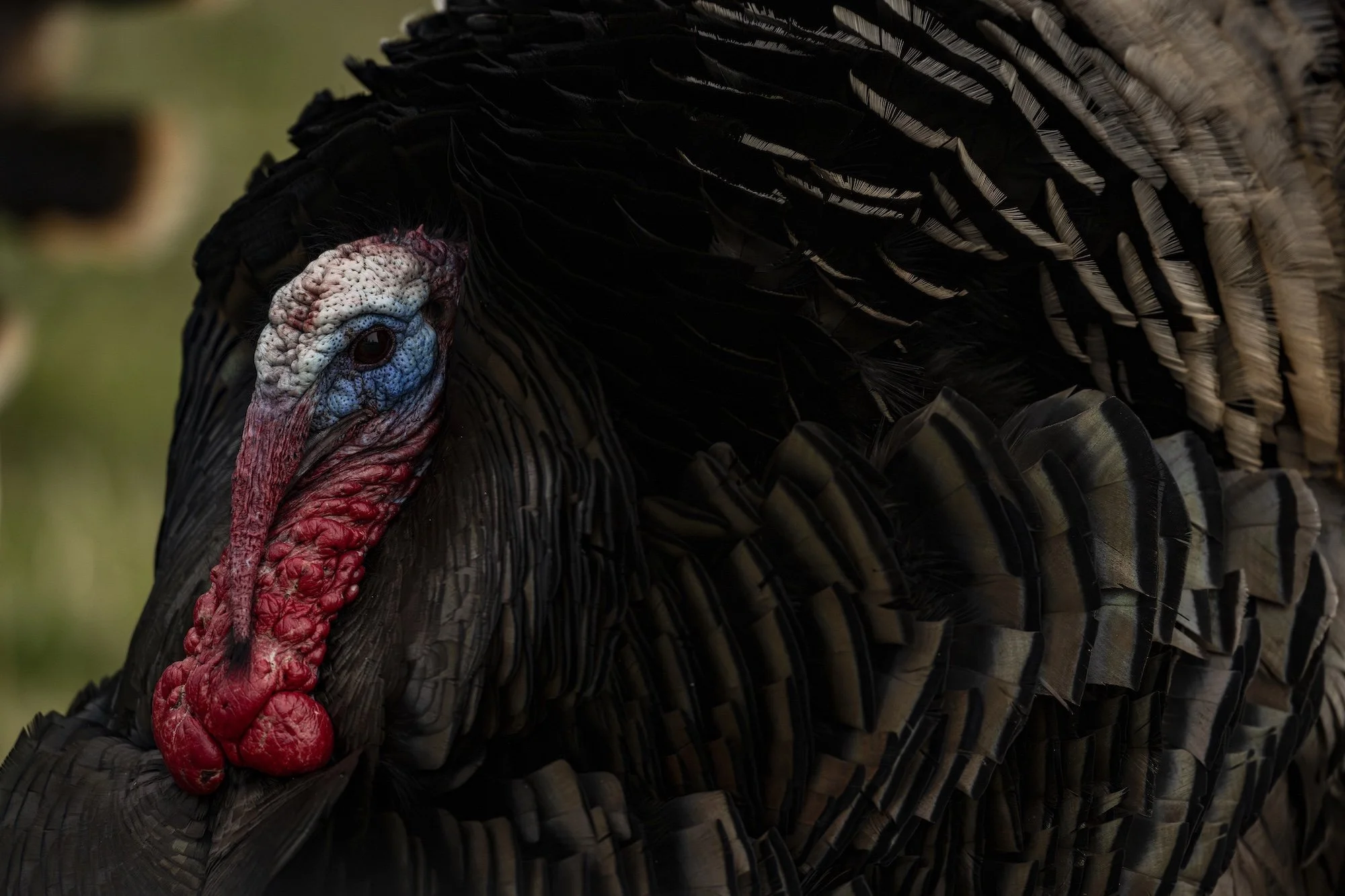
Wild Turkey Tom, RMNP Spring 2026 | Nikon Z9 + Nikkor 500mm F4E FL ED VR
They make friends. Wild turkeys sometimes forage alongside other animals, such as deer and squirrels. They will often engage in play behavior with them. Wildlife biologists believe this may help all of the animals stay alert for predators.
They're a conservation success story. US game managers estimate that wild turkey numbers fell to around 30,000 in North America in the late 1930s. Thanks to decades of habitat restoration and relocation programs, the population is now estimated at over 7 million.
So when the turkey comes out of the oven today, remember there's a surprisingly fast, loud, and sociable wild relative behind it. Hope you enjoyed all the turkey facts, and have a happy Thanksgiving, everyone!