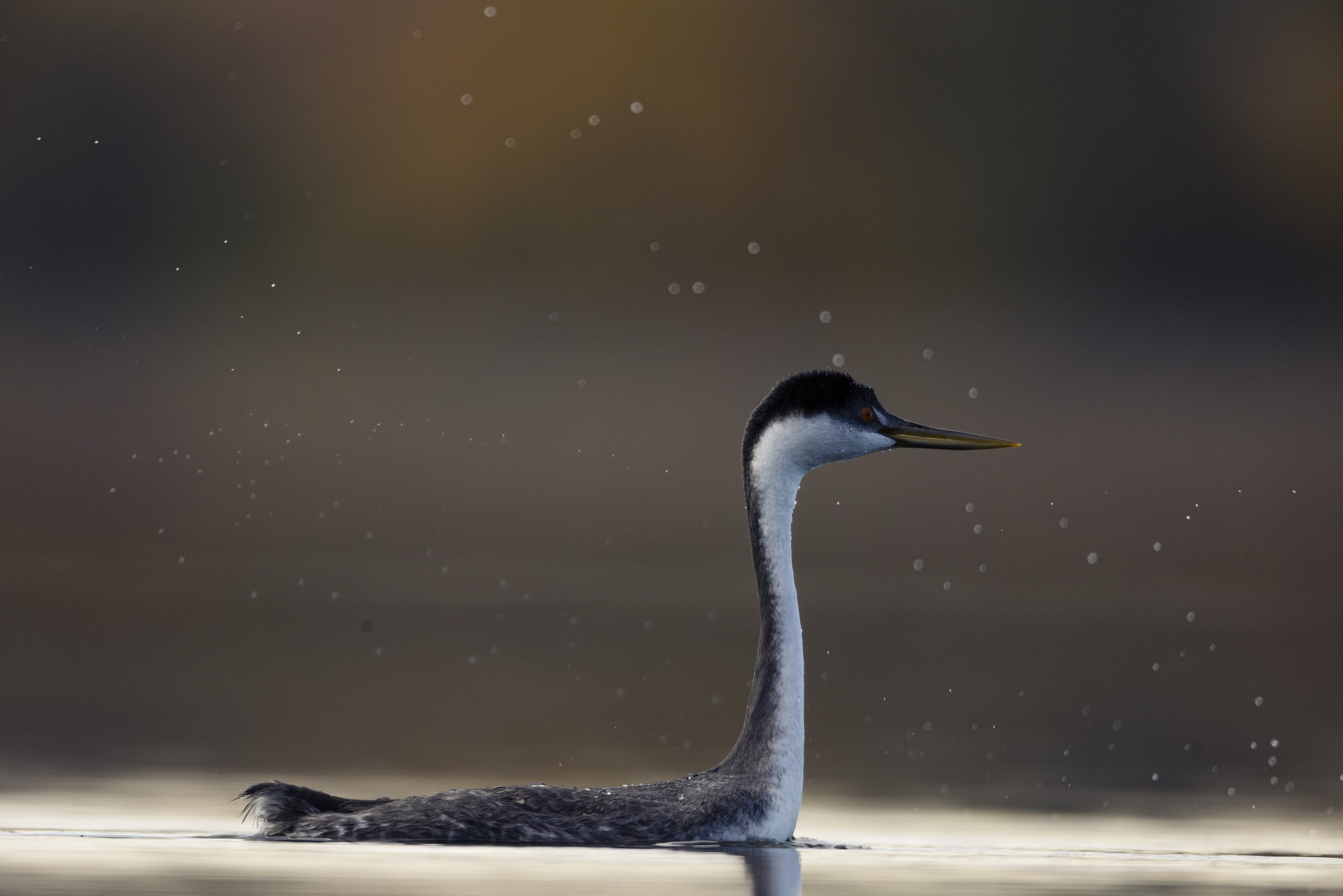
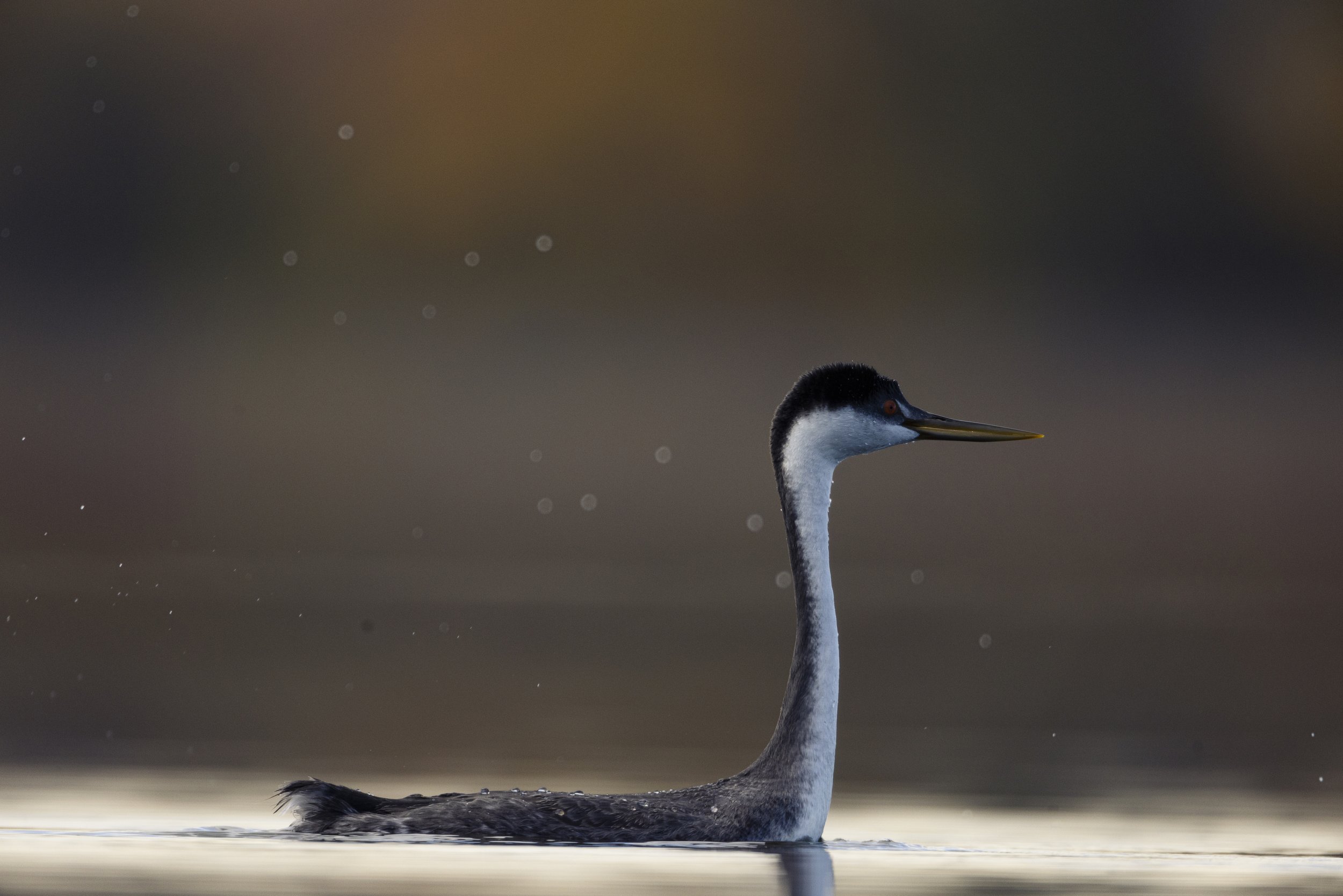
Field Report - October 27, 2022 | Western Grebes
About a week before these images were taken, I got a tip from a colleague about a concentration of wintering water birds on a small reservoir north of Denver. I made a plan to go check it out. When I arrived, there was a high concentration of Western Grebes, a bird species that is very enjoyable to photograph, not only because of their striking appearance, but because of their curious, quirky personality.
Photographing waterbirds like this is a tricky proposition, especially if you intend to shoot water level as I did. Shooting water can be made easier with equipment, such as a floating blind and floating camera supports, but this will also require you to have the proper waterproof attire, as well as all the precautions necessary to protect your equipment for operations over open water. The other option, the path I chose on this particular day, is hand-holding on the shoreline, or utilizing a monopod.
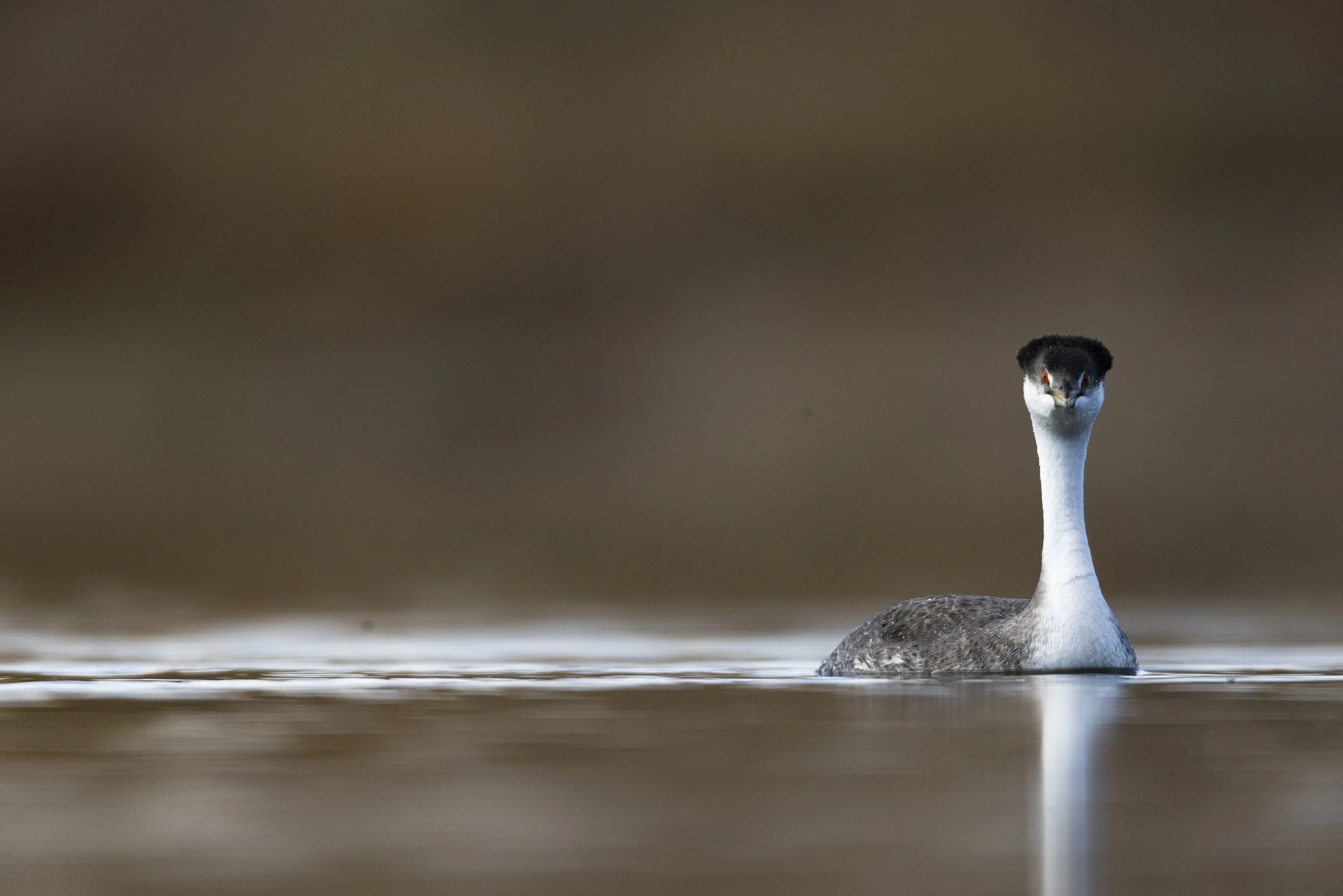
Canon EOS R5 | EF 1.4X Extender III | EF 800mm F5.6L IS USM
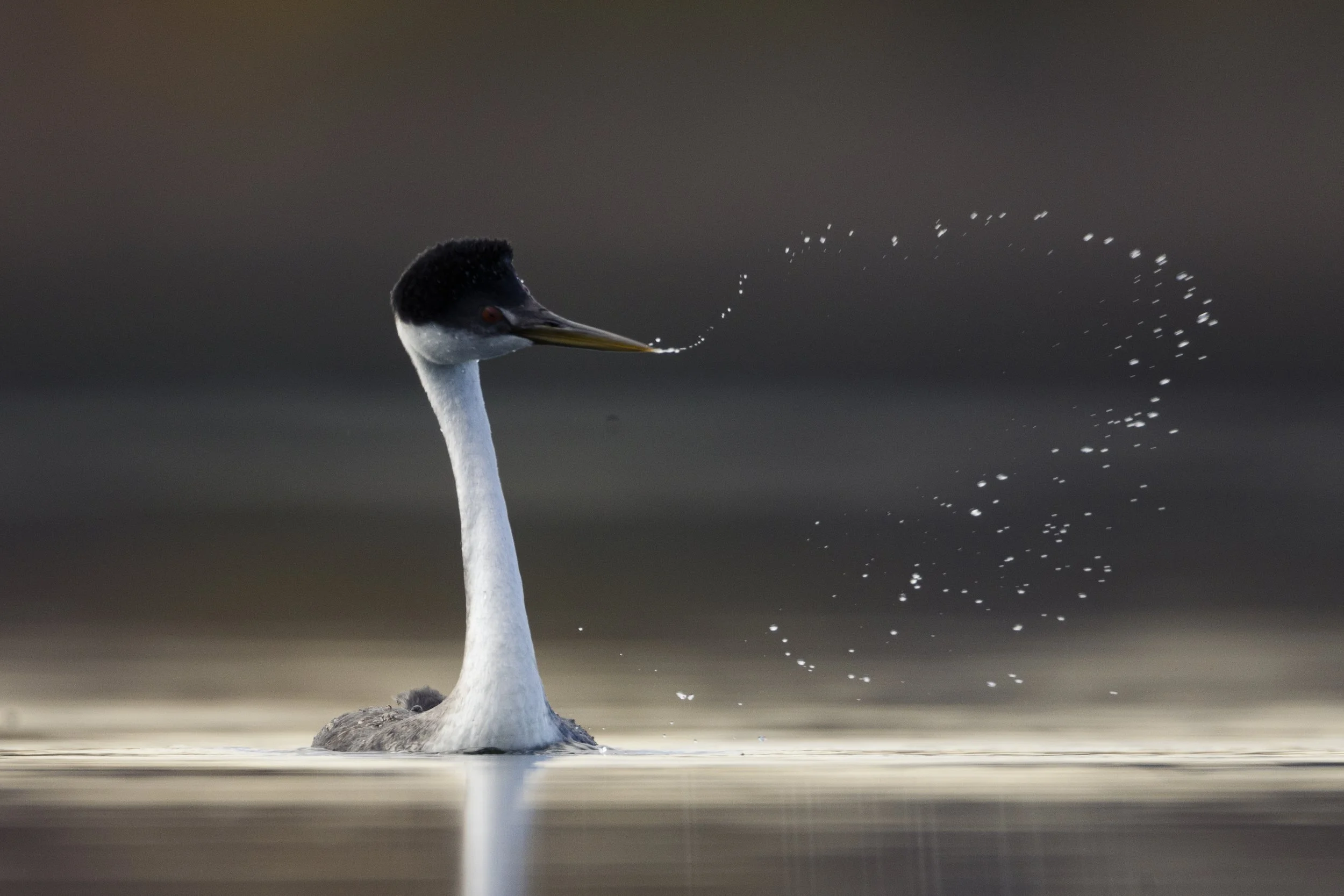
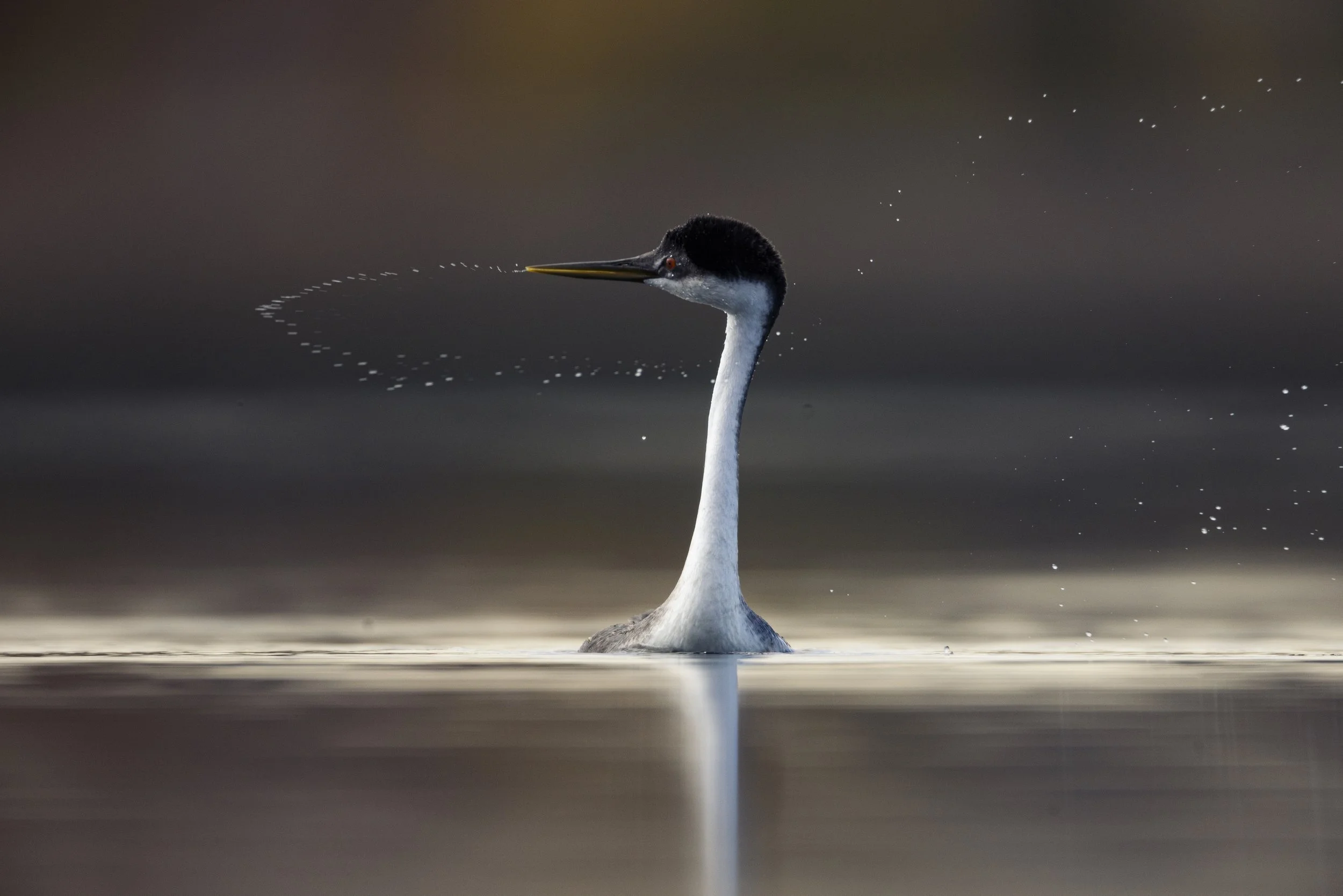
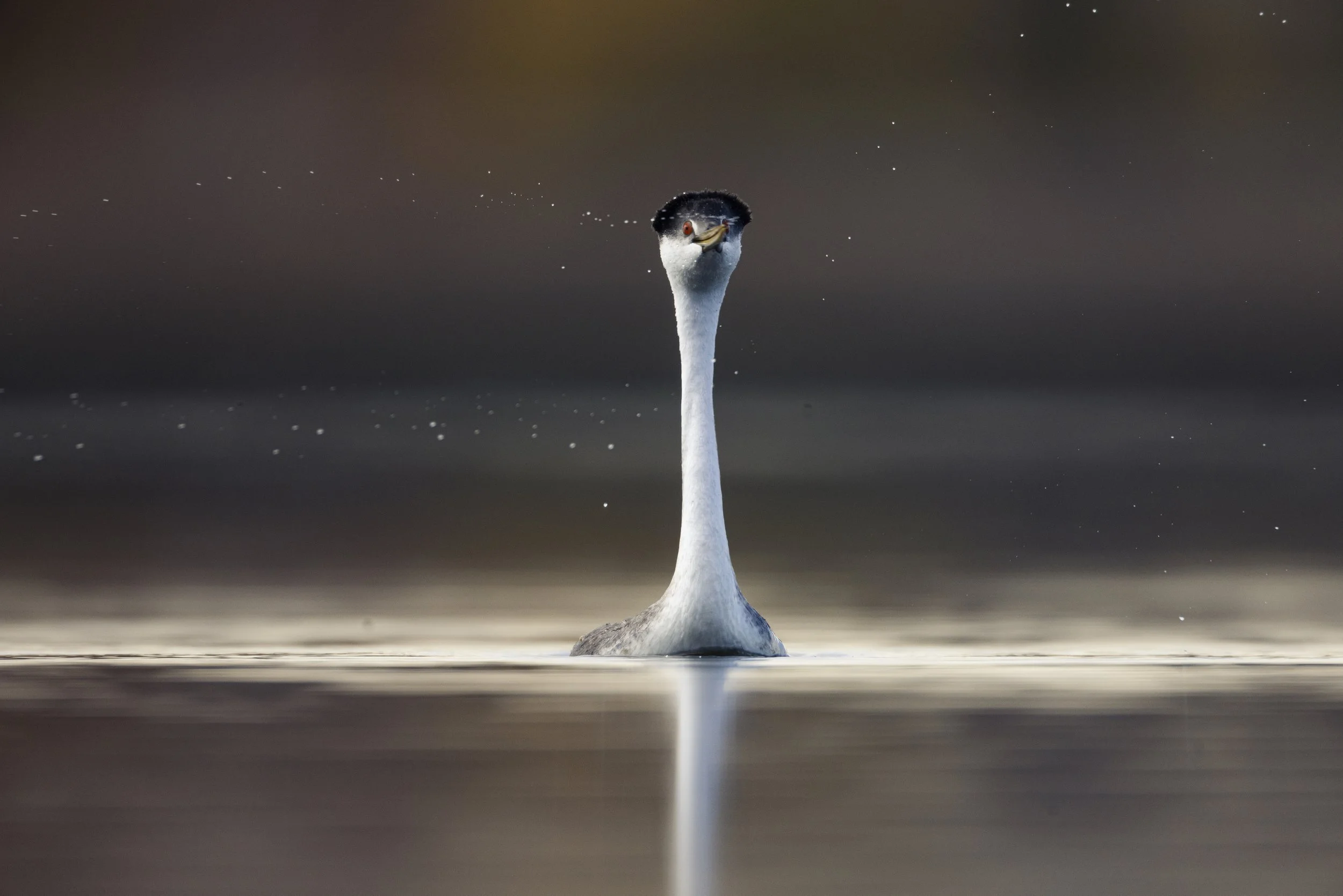
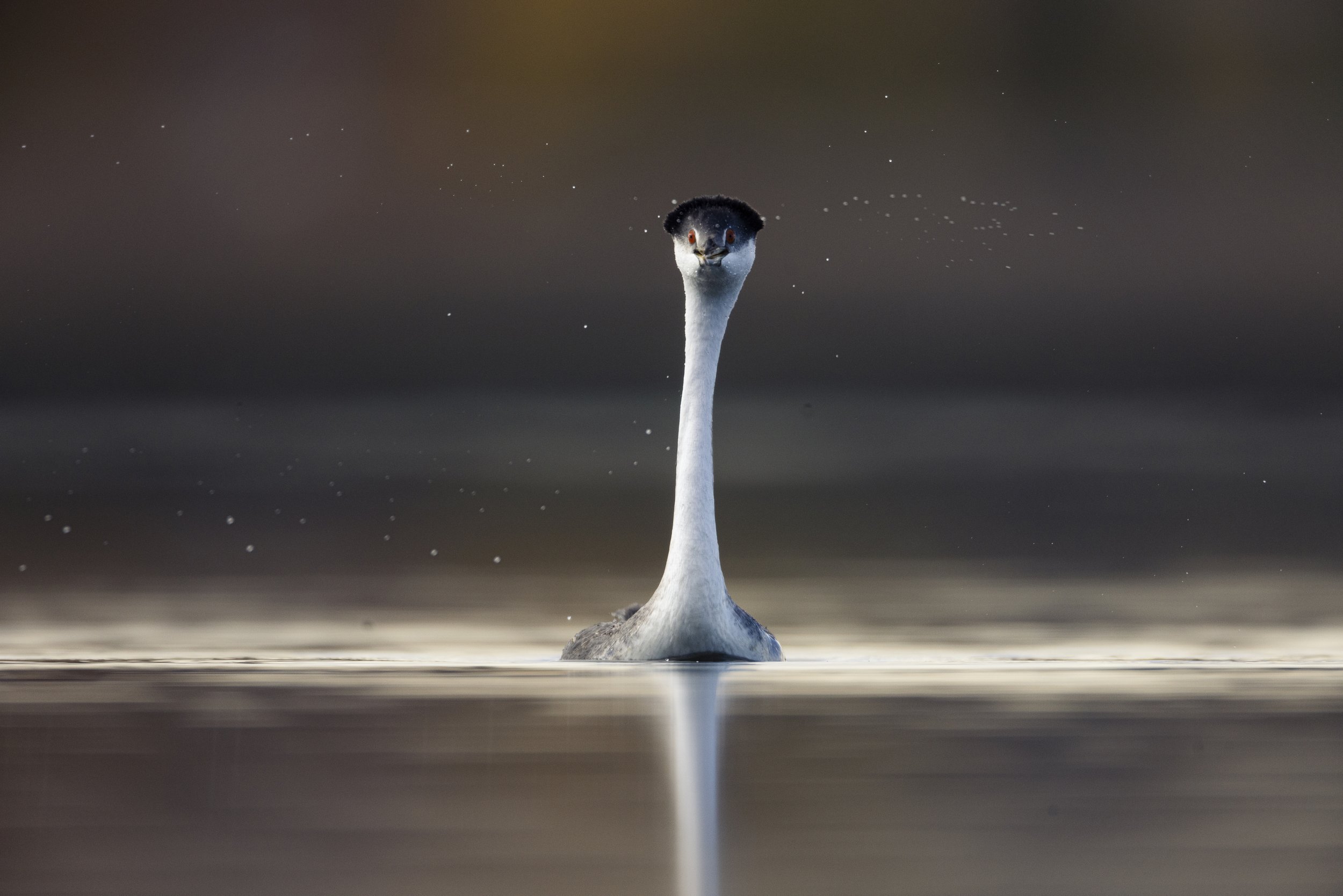
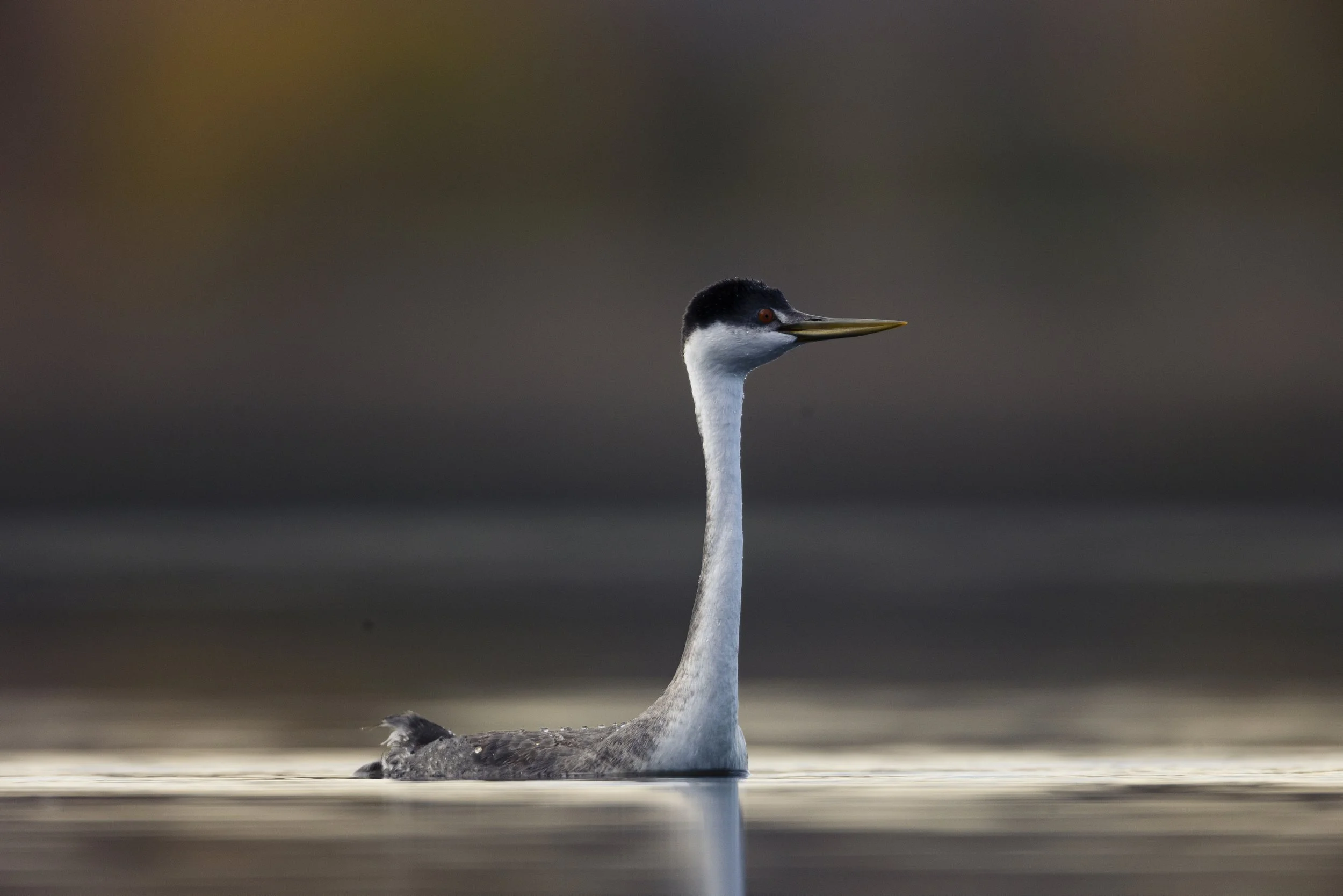
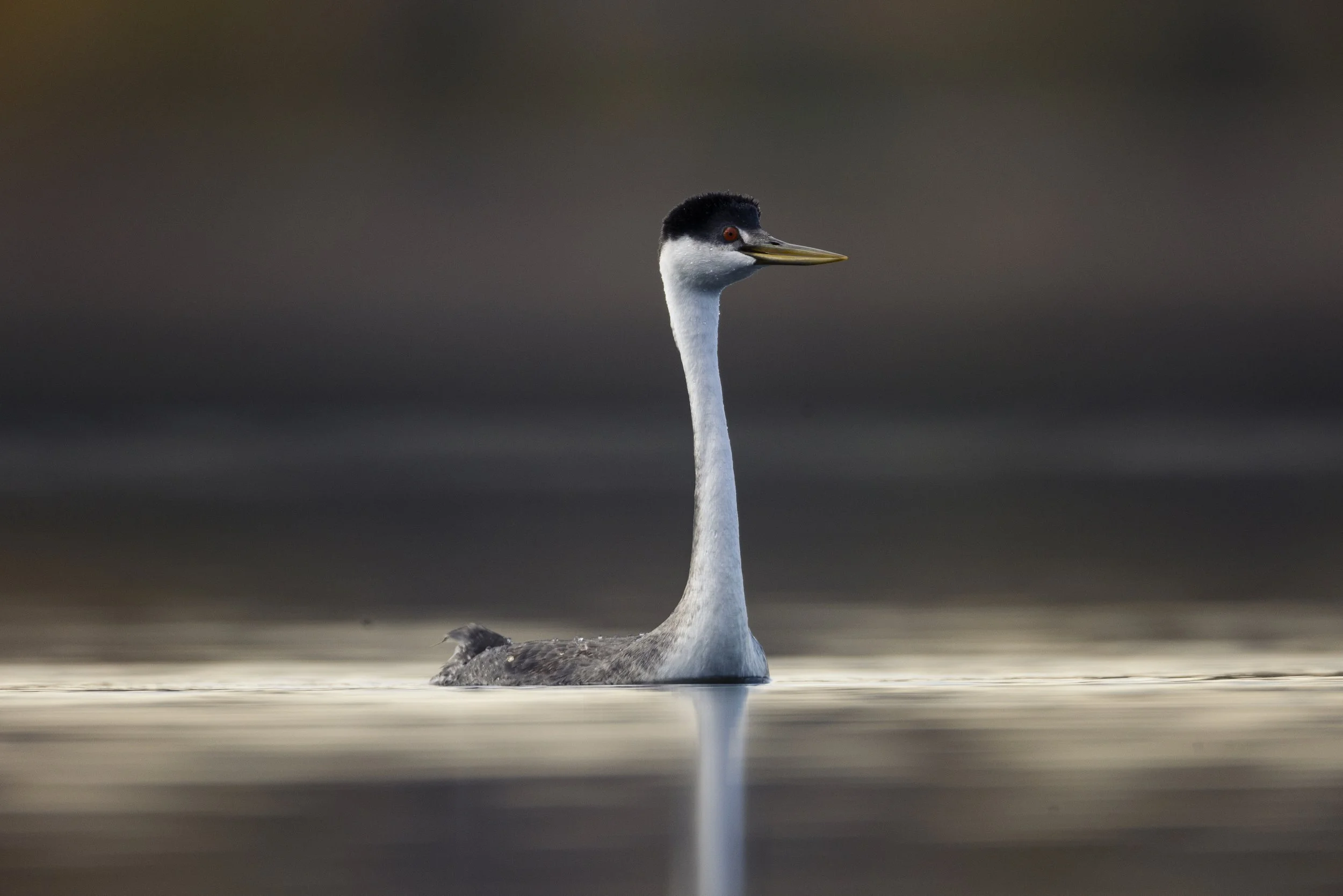
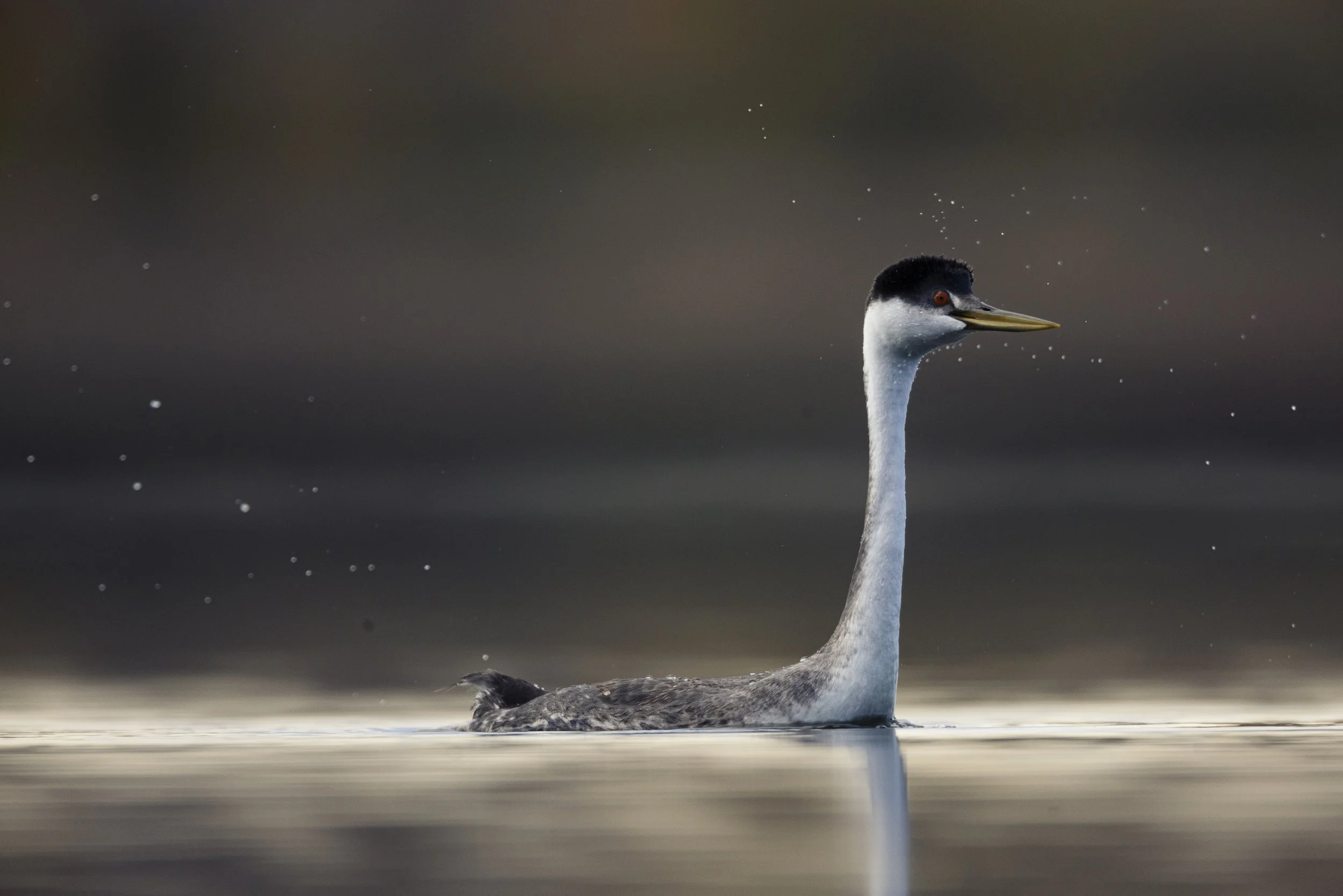
Adult Western Grebe is curious about the strange creature taking it’s picture.
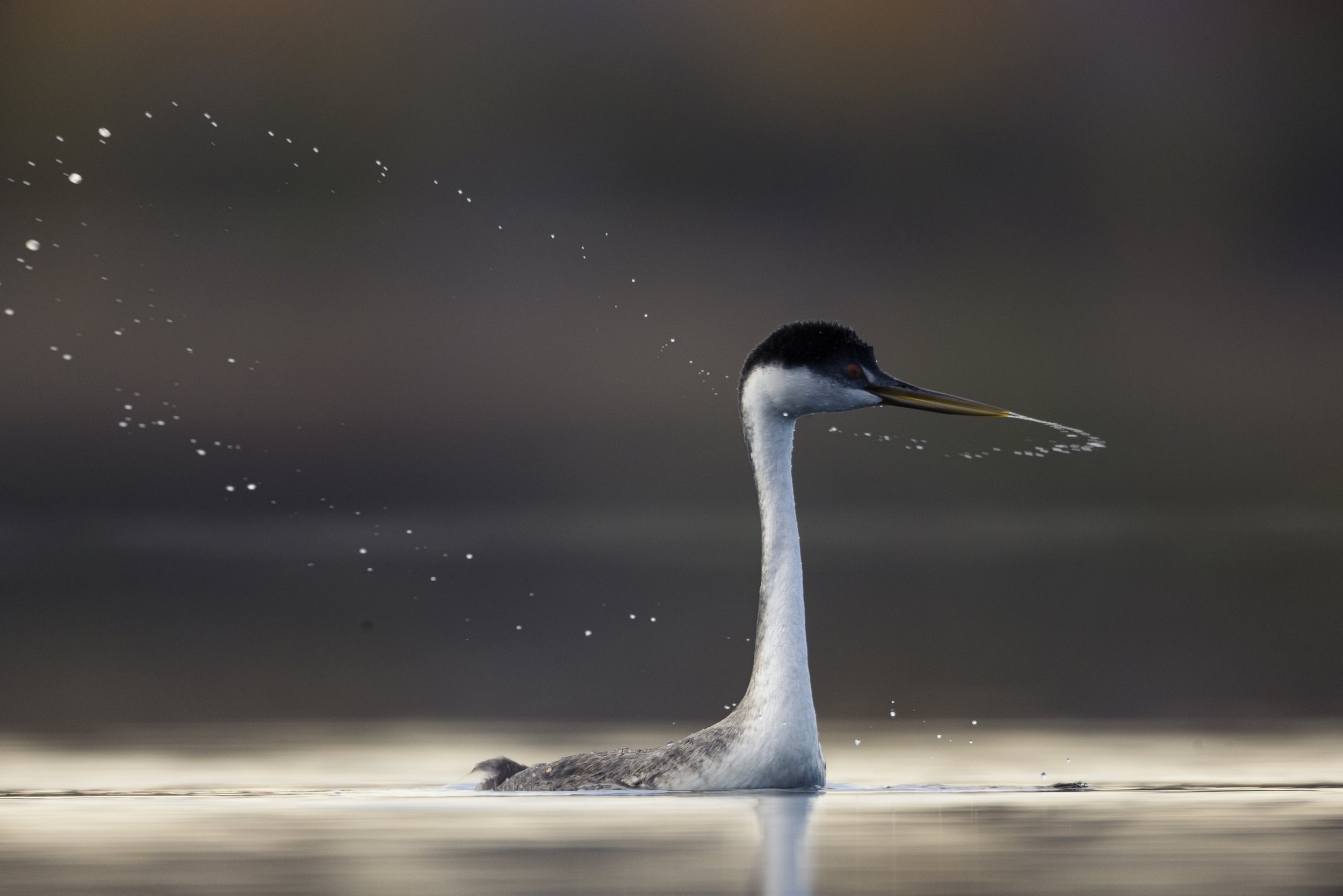
The main reason for shooting at water-level is to achieve the razor thin appearance of the water’s surface. The other reason is, shooting a such an extreme angle to your subject exaggerates the depth of field created with a long telephoto lens, creating this knife edged focus area surrounding your subject, which is very nice as you can see (it also creates a better composition). Getting into position for this shot requires a prone position with a ground pod or short tripod, or in this case hand-holding the camera and lens just above the water’s surface at the shoreline. This is relatively easy with a small telephoto zoom, but becomes more difficult with a larger prime for example.
My setup for the day was my trusty EF 800mm F5.6L IS USM from Canon, mounted on my EOS R5 body. I had a 1.4X Extender mounted as well, giving me an increase in focal length from 800mm to 1120mm. You may experience more optical aberrations and a varying loss of contrast with a teleconverter mounted, and you will definitely see an increase in heat haze or heat exchange more noticeably the closer you are to the waters surface. This is mainly due to the addition of the extra optical elements introduced with the use of an Extender or teleconverter. Even with the progression in modern optical design and coatings, this is still a problem that arises. Thankfully, on this particular day, the temperature of the water and the atmosphere were close enough to minimize this.
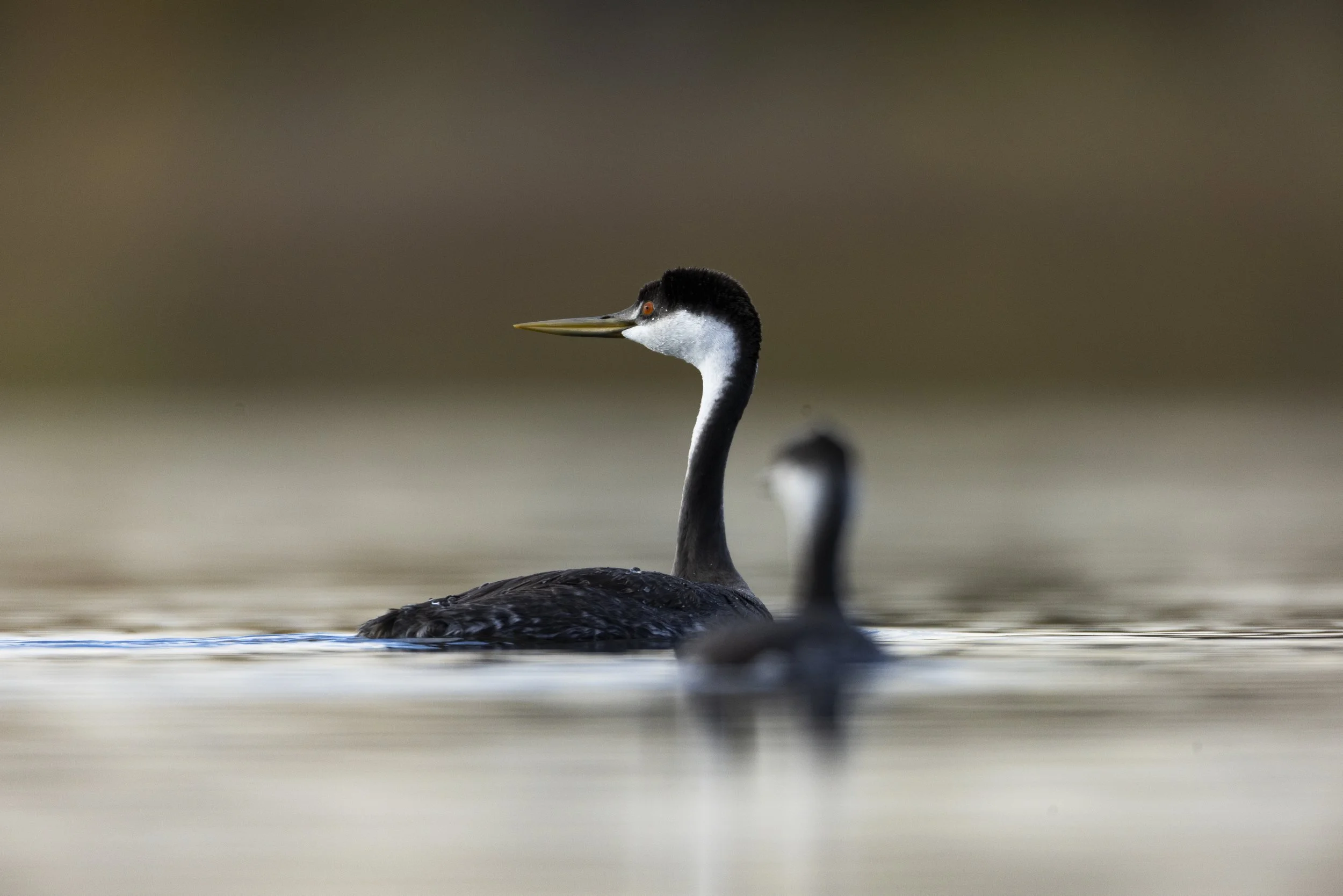
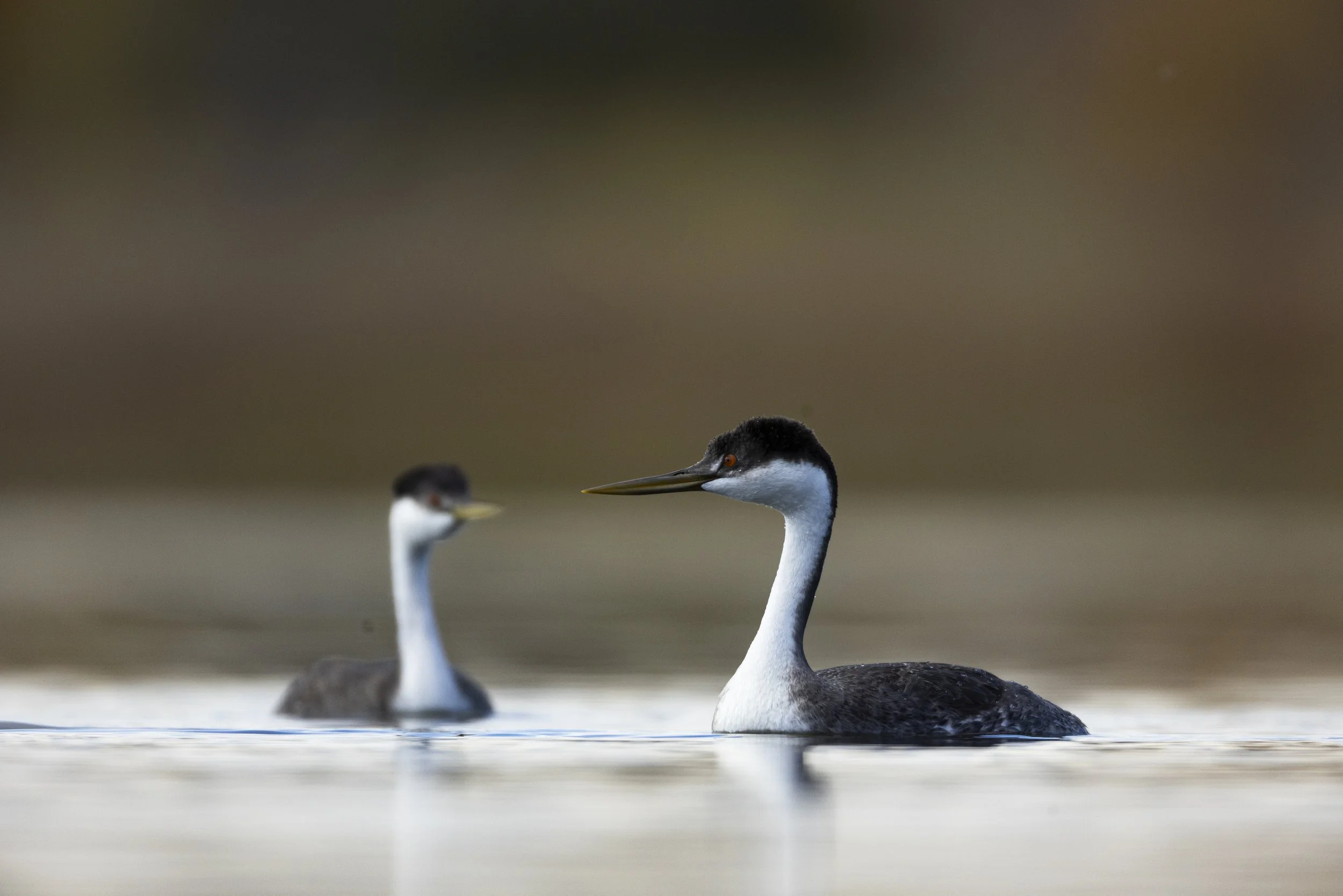
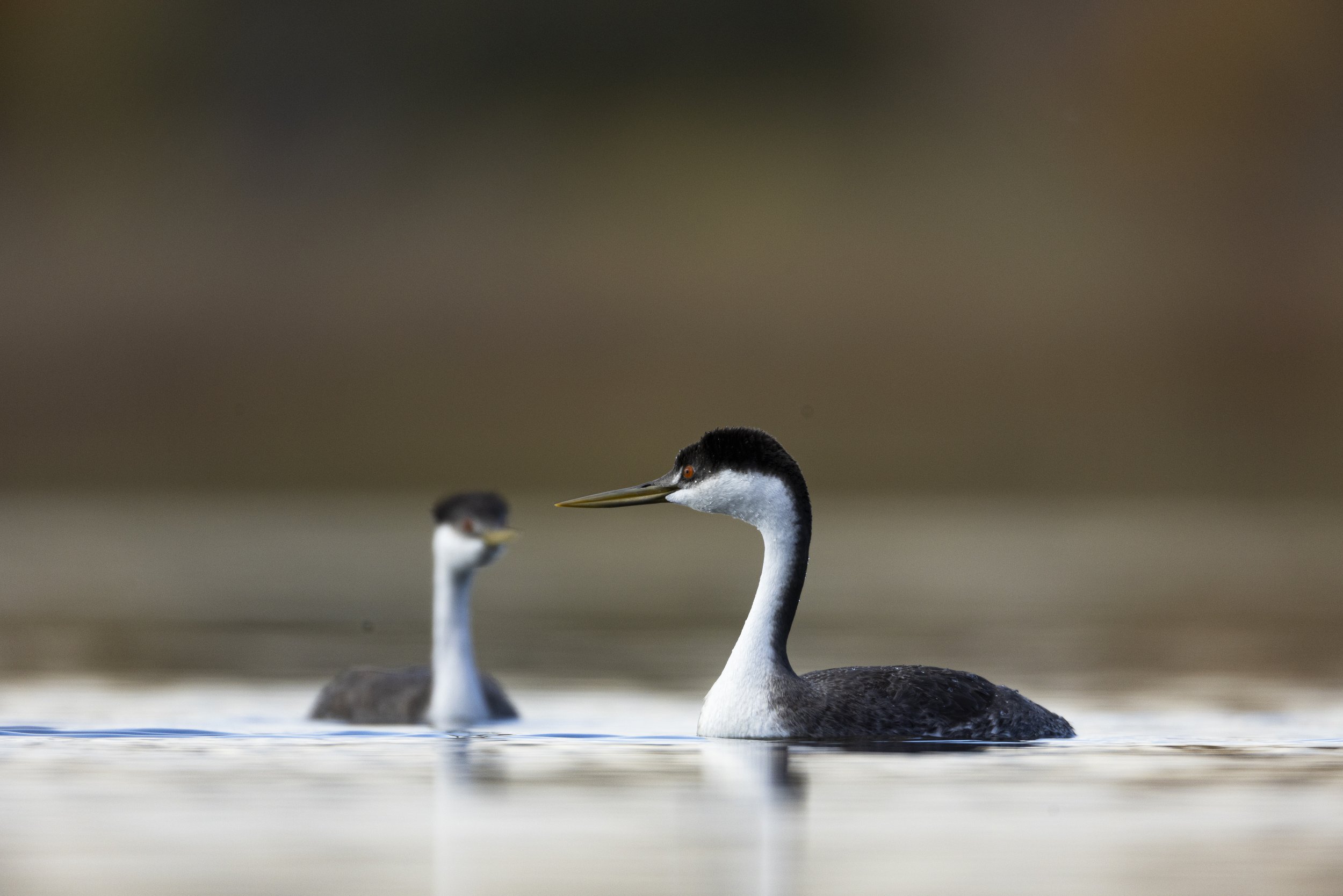
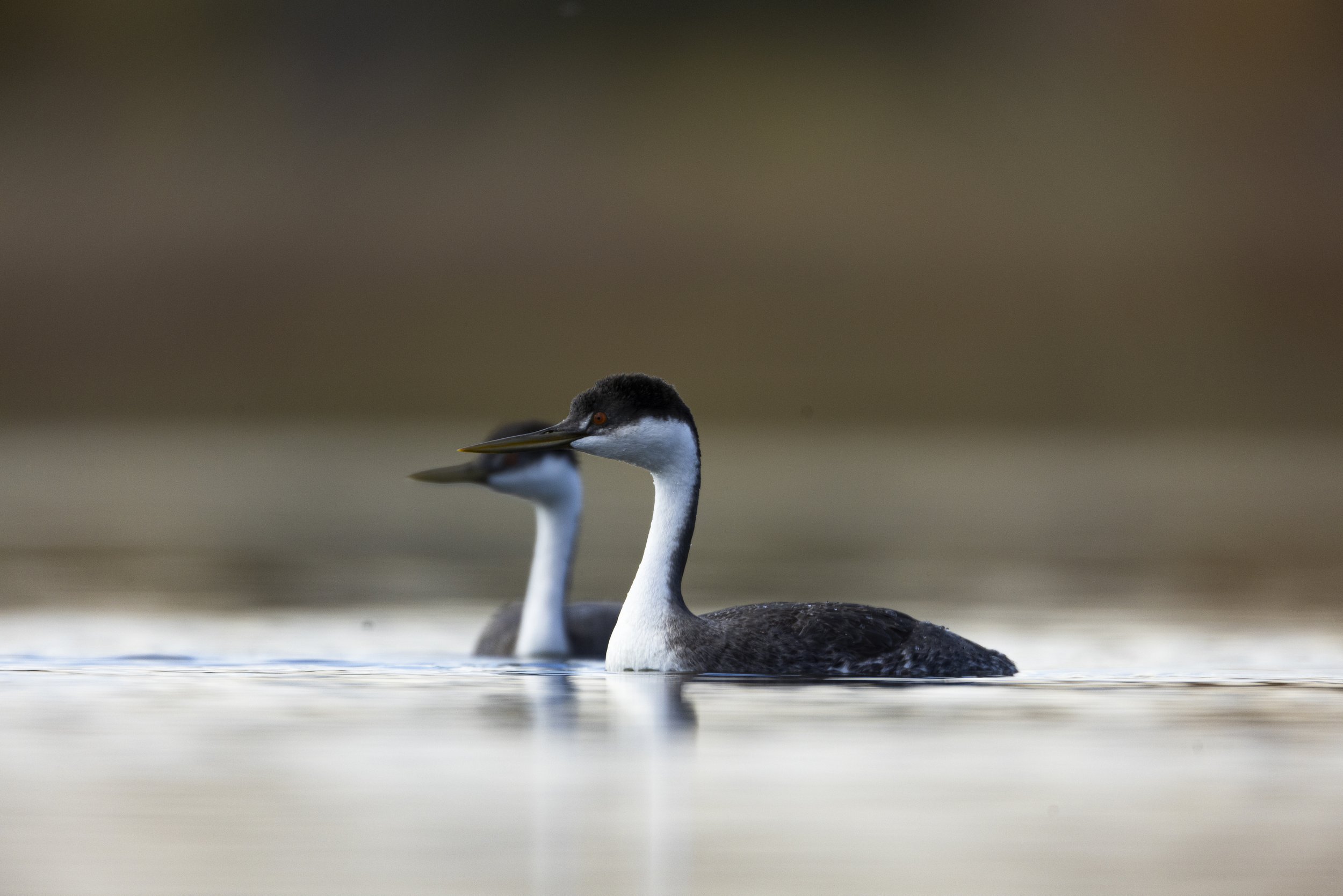
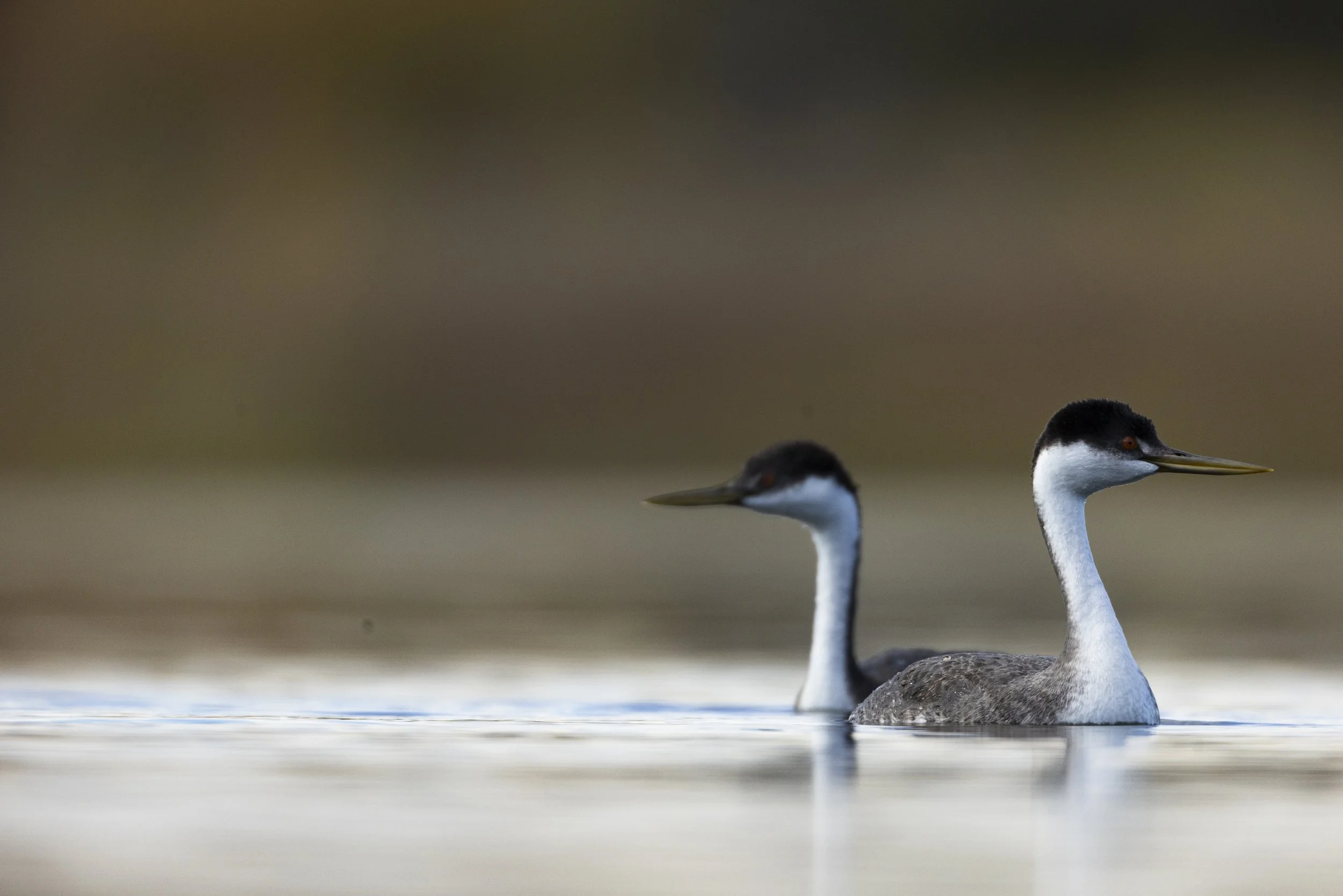
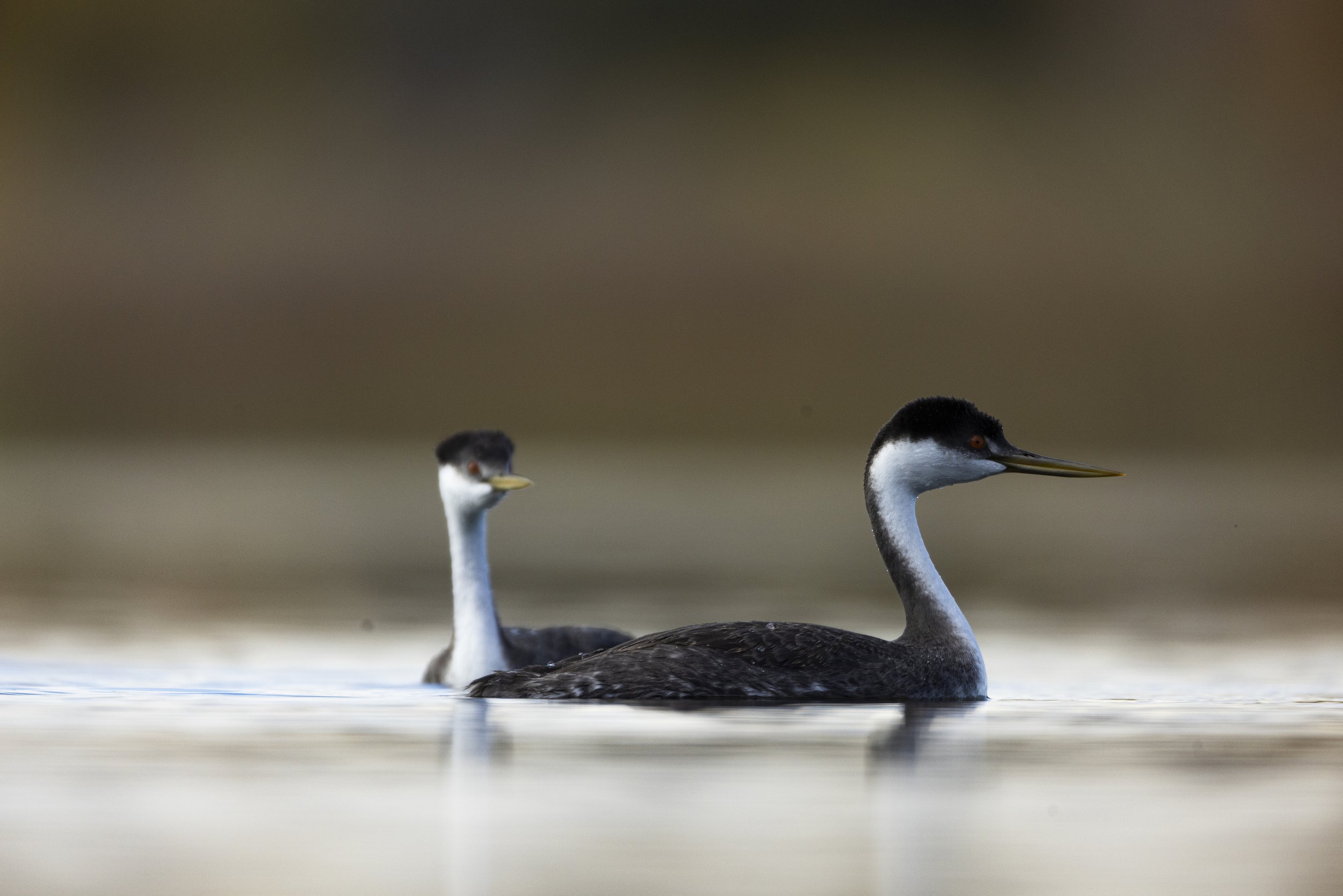
The practice of shooting water-level is also made difficult by the erratic nature of the subject in question. Grebes, when floating in a stationary spot, are easy to track. When they start to move around, they can be deceptively hard to follow, especially when using the rear screen, in a crouching position, on a rocky shoreline. I can tell you, I definitely should have brought a cushion.
There’s also another factor to consider, and it’s one that shows up with most bird photography, regardless of context. The tighter the framing on your subject, usually the harder it is to keep that subject in the frame. Shooting at 1120mm makes it difficult to frame a moving target in any context. Add to the fact that in a shoreline position, your view angle is so out of line with optical path of your lens, and you have something that is nothing but frustrating.
If you can persevere through all the discomfort however, you will find as I did, that these Western Grebes are an extremely entertaining bird to watch and photograph. They are highly active and curious in their behavior, and their quirky displays have a humorous humanity to them. Their sporadic head movements, coupled with the bill dipping behavior I witnessed, make for some incredibly compelling images to boot. I will definitely be back to photograph them soon.